Embracing purposeful retirement: Guide to a thriving golden chapter

You are never too old to set another goal or to dream a new dream.” — Les Brown
For many people, retirement is a milestone they spend decades looking forward to. Yet when it finally arrives, it can bring emotions they never expected.
For years, your calendar has been filled with meetings, deadlines, responsibilities, and routines. Then suddenly, that structure disappears. While retirement offers freedom, it also asks an important question:
“What will give my life purpose now?”
The truth is, retirement isn’t simply about leaving work, it’s about entering a new season of life with intention.
It isn’t the final chapter of your story.
It’s the golden chapter where you finally have the freedom to write life on your own terms.
A fulfilling retirement doesn’t happen by accident. It is built through purposeful choices that nurture your mind, body, relationships, finances, and faith.
1. Expect the emotional transition
Many people imagine retirement as one long holiday. In reality, it usually unfolds in stages.
The honeymoon
The first few months often feel wonderful.
You finally sleep in, travel, spend time with family, tackle projects around the house, or simply enjoy not setting an alarm.
Enjoy it, you’ve earned it. But don’t be surprised when the novelty begins to fade.
The adjustment
This is where many retirees struggle.
Without the structure of work, some people begin asking:
- Who am I without my job?
- What should I do with my days?
- Why do I suddenly feel restless?
It’s common to experience boredom, loneliness, or even a loss of identity.
Couples may also discover they have very different expectations for retirement after suddenly spending every day together.
None of this means you’ve made a mistake. It simply means you’re adjusting to a completely different way of living.
Creating your new normal
Eventually, retirement begins to feel less like an ending and more like a fresh beginning.
You establish new routines. You discover new interests. You create a new identity, not based on your profession, but on who you are now.
That’s where retirement truly becomes fulfilling.
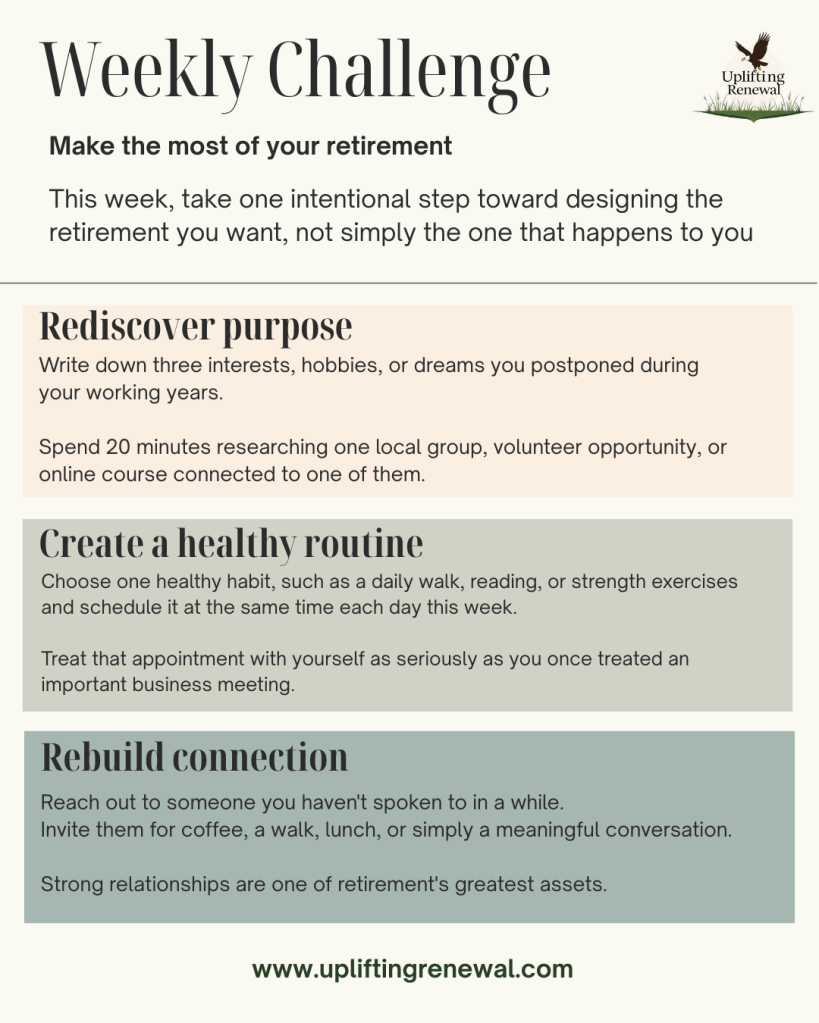
2. Your new job is purpose
Retirement may end your career, but it should never end your contribution.
After decades of working, you’ve accumulated something incredibly valuable:
- Experience
- Wisdom
- Relationships
- Practical knowledge
Those gifts don’t disappear the day you retire. This is your opportunity to invest them differently.
You could:
- Mentor younger professionals
- Volunteer in your community
- Support charities or faith-based organisations
- Consult or work part-time in a role you genuinely enjoy
- Start a small business you’ve always dreamed about
- Write a book
- Learn music or painting
- Teach, coach, or speak.
Purpose keeps both the heart and mind alive.
Retirement isn’t about becoming less useful but about becoming useful in new ways.
3. Protect the three pillars of a healthy retirement
Stay physically active
Your greatest investment during retirement isn’t your pension. It’s your health.
Choose activities you genuinely enjoy:
- Walking
- Swimming
- Gardening
- Cycling
- Dancing
- Strength training
- Joining a local fitness group
Consistent movement protects both your body and your mental wellbeing.
Keep learning
There’s always new knowledge to acquire. Curiosity keeps the mind young so find something of interest to you and start building that wealth of knowldge.
- Learn a language
- Take an online course
- Research family history
- Study Scripture more deeply
- Master technology
- Read widely
Every new skill builds confidence and keeps your brain engaged.
Remember: You stop growing only when you stop learning.
Build a routine
One of the biggest surprises in retirement is discovering that too much freedom can become overwhelming.
Without structure, days can blend into one another.
Instead, design your own schedule. Use the same discipline that helped you succeed during your career.
Consider creating a weekly rhythm that includes:
- Morning walks
- Exercise
- Reading
- Volunteering
- Family time
- Hobbies
- Rest
- Social activities
Freedom works best when supported by healthy routines.
“You can’t use up creativity. The more you use, the more you have.” — Maya Angelou
4. Stay connected
Work naturally gave you people to interact with every day. Retirement doesn’t.
That means you now have to build your social life intentionally.
Reconnect with:
- Old colleagues
- Former classmates
- Friends
- Church members
- Extended family
Join clubs, community groups, volunteer organisations, or hobby groups.
If you’re married, openly discuss expectations for retirement. Balance shared activities with individual interests.
Healthy relationships remain one of the strongest predictors of happiness in later life.
5. Protect your financial peace
Retirement changes your relationship with money.
Instead of primarily earning, your focus shifts toward wisely preserving what you’ve built.
A few practical principles can make a significant difference:
- Avoid making large withdrawals without careful planning.
- Be cautious about investing your retirement savings in unfamiliar business opportunities.
- Seek professional financial advice before making major financial decisions.
- Keep proper records of loans or financial agreements, even with family.
- Live within your means while still allowing yourself to enjoy this season.
One more important principle:
Your children may love you deeply, but they also have responsibilities of their own.
Support them where you can, but also protect your own independence.
Healthy boundaries preserve dignity, for everyone.
6. You don’t have an expiration date
Society often treats ageing as something to fear. The scripture doesn’t.
Growing older simply means entering a different assignment. You may not have the same physical strength you once had. That’s perfectly normal.
Wisdom now becomes your greatest strength.
Your experiences, the victories, failures, disappointments, and lessons have become treasures that younger generations need.
Don’t spend your retirement wishing you were younger. Spend it becoming the wisest version of yourself.
- Keep dreaming
- Keep creating
- Keep contributing
Life after retirement isn’t measured by how many years remain. It’s measured by how intentionally you live the years you’ve been given.
Look ahead with hope, your best work may still lie before you.
Scriptural perspective
The bible never presents retirement as stepping away from purpose. Instead, it presents it as a transition from labour to legacy.
You may retire from your profession, but you never retire from serving others, encouraging your family, growing spiritually, or sharing wisdom.
1. Retirement can mean reassignment
The only mandatory retirement described in the bible applied to the Levites responsible for the physically demanding work of the Tabernacle.
At age fifty, they stepped away from heavy labour but they didn’t stop serving.
Instead, they became mentors, overseers, and protectors, using wisdom rather than physical strength.
“This applies to the Levites: Men twenty-five years old or more shall come to take part in the work… but at the age of fifty, they must retire from their regular service and work no longer. They may assist their brothers…” (Numbers 8:24–26)
God didn’t remove their purpose. He redirected it.
2. Fruitfulness doesn’t retire
The Bible never suggests that usefulness has an age limit.
Instead, it celebrates lifelong fruitfulness.
“The righteous will flourish like a palm tree… They will still bear fruit in old age, they will stay fresh and green.” (Psalm 92:12,14)
Retirement is not God’s invitation to idleness.
It is His invitation to influence others through wisdom, character, and experience.
3. Legacy is your greatest investment
Throughout Scripture, older generations are called to teach, mentor, and strengthen those who follow.
“Remember the days of old; consider the generations long past…” (Deuteronomy 32:7)
Titus 2 likewise encourages older men and women to invest intentionally in younger generations.
Your greatest legacy isn’t the title you once held. It’s the lives you help shape.
4. Beware of living only for comfort
In the Parable of the Rich Fool, Jesus warns against making comfort the ultimate goal.
The man’s mistake wasn’t saving wisely. His mistake was believing life was only about relaxing and enjoying his possessions while forgetting his greater purpose.
Retirement is a season to enjoy life, but not to disengage from it.
- Continue serving
- Continue giving
- Continue growing
Purpose is one of God’s greatest gifts at every age.
“Retirement is a blank sheet of paper. It is a chance to redesign your life into something new and different.” — Patrick Foley